Everything You Need to Pass — Manchester Driving Guide
DriveSQ students in Manchester (M1) don't just get lessons — they get a complete learning ecosystem built around passing first time at Manchester City Driving Test Centre.
Driving in Manchester — Local Knowledge
Manchester's Northern Quarter has narrow cobbled streets that test low-speed vehicle control and observation skills. DriveSQ instructors in Manchester cover Oxford Road and Deansgate in every lesson plan, ensuring students develop genuine local road confidence before test day. Your instructor's knowledge of M1 roads, pedestrian patterns, and local junction behaviour gives you a measurable advantage over learners who have simply followed a generic syllabus. The Trafford Centre, opened in 1998, is the UK's second largest indoor shopping centre with over 35 million annual visitors. Its road network — Trafford Way and the A56 — is one of Greater Manchester's busiest non-motorway driving environments.
The DriveSQ Student App — Your 24/7 Learning Companion
Every DriveSQ student in Manchester gets full access to the DriveSQ student app from the moment they book — at no extra cost. The app works on any device (phone, tablet, laptop) with no download required. It connects directly to your instructor's dashboard, so your progress updates in real time after every lesson. Here are the features our M1 students use most:
Hazard Perception Tips
The DriveSQ student app includes a dedicated hazard perception coaching section with tips drawn from real DVSA test data. Learn exactly when to click, how to identify developing hazards versus static ones, and how to avoid the most common scoring mistakes. Hazard perception is one of the most underestimated parts of the theory test — the app gives it the attention it deserves.
Daily Streak Tracker
The DriveSQ app rewards consistent study with a daily login streak counter. Every day you engage with the app — whether completing a theory mock, reviewing topics, or checking your progress — extends your streak. Research shows spaced repetition and daily engagement significantly improves theory test scores.
Progress Tracker
Your DriveSQ student dashboard tracks every lesson you complete, showing total hours done, topics covered, and an automatically calculated test readiness score. Your instructor updates your progress after each lesson — you see exactly what you have mastered and what still needs work, so every lesson has a clear purpose.
Theory Test Guide & Mock Tests
According to DVSA statistics, the most common reasons for failing the practical driving test are: not making effective observations at junctions (11.9% of all fails), inappropriate speed (10.3%), and poor positioning at roundabouts (8.2%). The DriveSQ student app includes a complete theory mock test engine with DVSA-style questions, instant scoring, and detailed answer explanations. Students can run unlimited mock tests before their theory test date — the app tracks scores over time so improvement is clearly visible.
The theory guide section covers all 14 subject areas assessed by the DVSA: alertness, attitude, safety and your vehicle, safety margins, hazard awareness, vulnerable road users, other types of vehicle, vehicle handling, motorway rules, rules of the road, road and traffic signs, documents, accidents, vehicle loading, and environmental responsibility.
Access Theory Mocks in the AppPractical Driving Test Guide
A candidate can request their test in Welsh at any DVSA test centre in Wales. In England, tests are conducted in English only, though written guidance is available in multiple languages. DriveSQ serves learners from diverse backgrounds across Greater Manchester. DriveSQ's practical guide is built into the student app and covers every element of the Manchester City test routes. From the moment you sit in the car with the examiner to the independent driving section and final manoeuvre — the guide prepares you for exactly what to expect, eliminating surprises on test day.
The guide includes step-by-step instructions for all three possible manoeuvres (reverse bay parking, parallel parking, pulling up on the right), the Show Me Tell Me vehicle safety questions, emergency stop procedure, and independent driving using both sat-nav and road signs — so whichever combination your examiner chooses, you are ready.
Access Practical Guide in the AppLife at DriveSQ — On the Road in Manchester
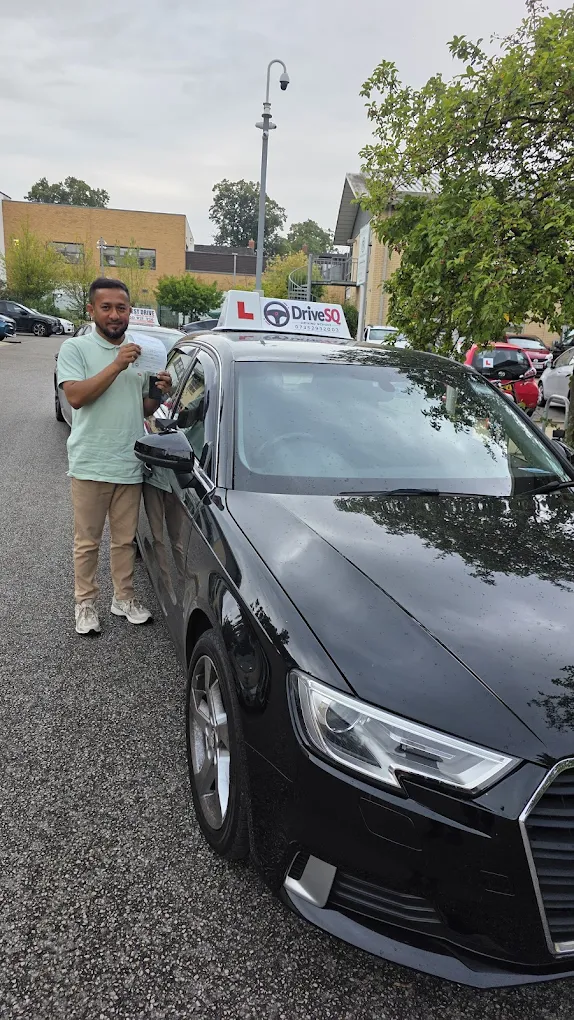
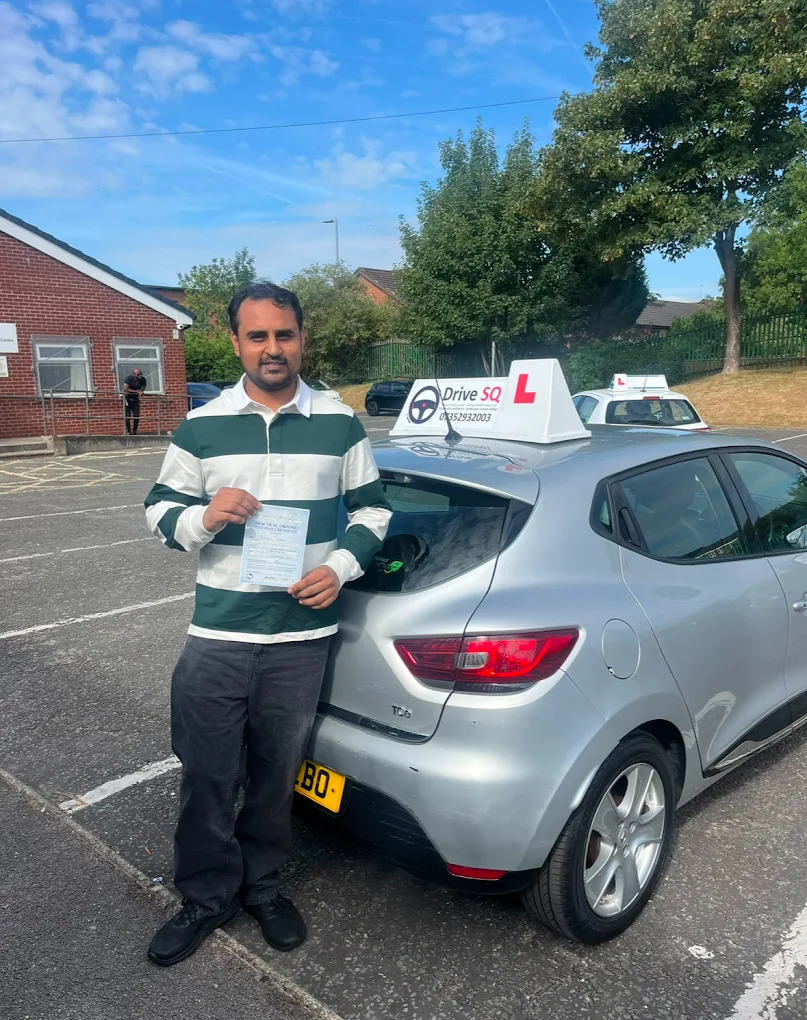
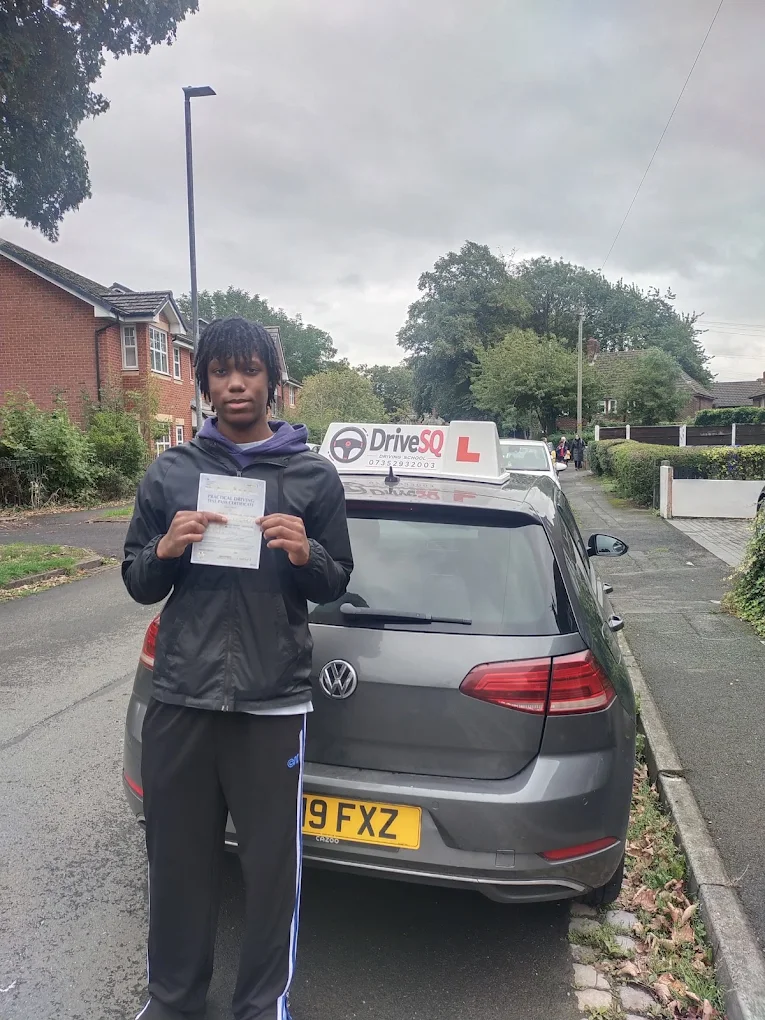
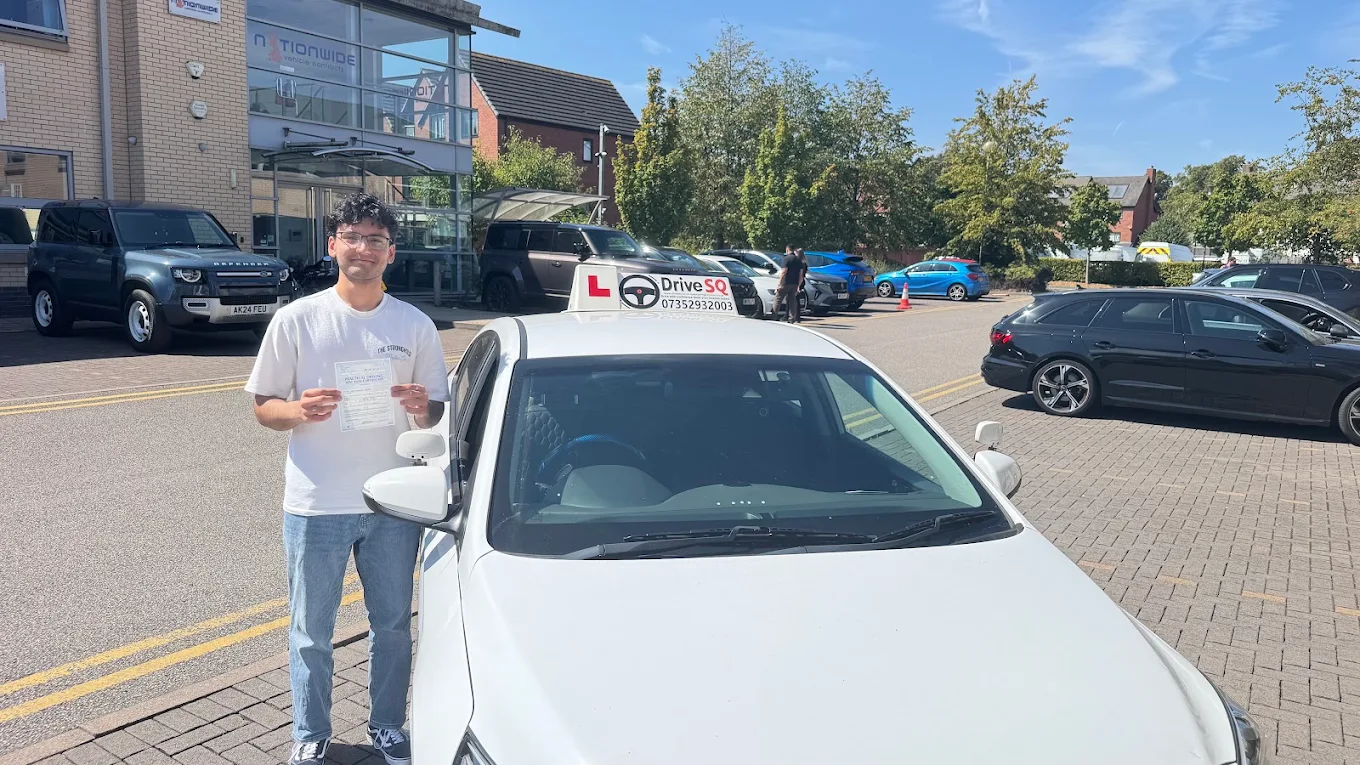
 DVSA Approved
Book Your Lessons in Manchester Today
New students receive access to the DriveSQ student app immediately after booking — giving instant access to theory mock tests, the practical guide, and progress tracking before the first lesson even begins.