Getting Started
The journey to your driving licence begins with your provisional licence application. Apply through the DVLA website up to three months before your 17th birthday — processing takes approximately one to three weeks. Your provisional licence must arrive before your first lesson, as your instructor is legally required to verify it before allowing you to drive.
You will need your National Insurance number, a valid UK passport or birth certificate, and addresses for the last three years. The application costs £34 online. Once received, your provisional licence is valid for ten years.
DriveSQ recommends booking your first lesson for the week of your 17th birthday. This maximises your learning time and capitalises on the birthday motivation that naturally accompanies this milestone.
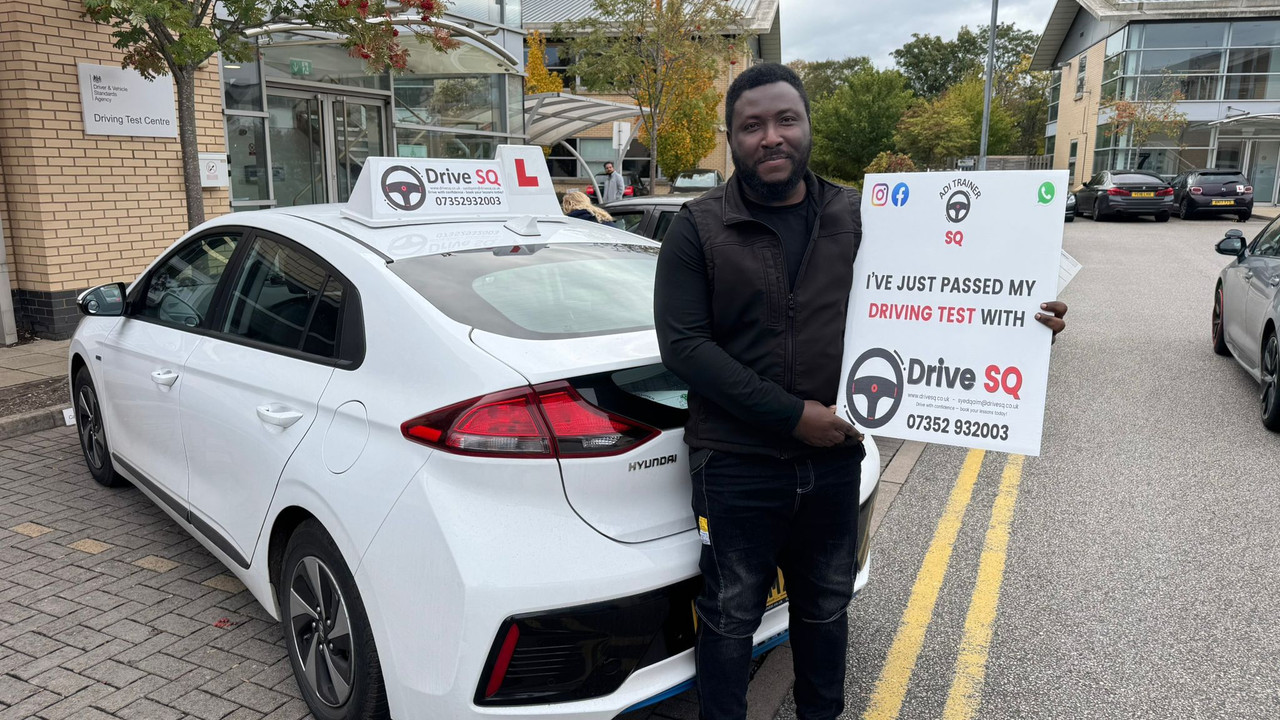
The Teen Learner Advantage
Neuroplasticity
At 17, your brain is exceptionally receptive to new motor skill acquisition. The neural pathways required for clutch control, steering accuracy, and hazard perception form rapidly with consistent practice, giving teen learners a genuine biological advantage in skill development speed.
Available Time
School and college schedules, while busy, typically offer more flexible windows for lessons than full-time employment. After-school sessions, weekend bookings, and holiday intensive courses are all available through DriveSQ to maximise your learning opportunities.
Peer Motivation
Learning alongside school friends who are also starting lessons creates positive social motivation. Sharing experiences, comparing progress, and celebrating test passes together adds a supportive dimension to the learning journey.
Study Skills Transfer
Active students are practised at absorbing new information, following structured curricula, and preparing for formal assessments. These academic skills transfer directly to driving instruction and theory test preparation.
DriveSQ's Teen Programme
Foundation Phase (Lessons 1-10)
Vehicle control mastery: clutch operation, steering accuracy, gear changes, moving off, stopping, left and right turns, T-junctions, and basic roundabouts. These fundamental skills are practised on quiet residential roads across your local area until they become genuinely automatic.
Development Phase (Lessons 11-25)
Road interaction skills: multi-lane roundabouts, dual carriageway driving, complex junctions, bus lanes, tram crossings, and pedestrian hazard management. Theory test preparation begins during this phase, with your instructor integrating highway code knowledge into practical sessions.
Refinement Phase (Lessons 26-40)
Test-standard driving across all road types and conditions. Mock tests, manoeuvre perfection, independent driving practice, and show-me-tell-me preparation. Your instructor identifies and addresses any remaining weaknesses before recommending test booking.
Test Preparation (Lessons 40+)
Final polish: test route familiarity around your chosen test centre, examination of recent test report trends, and management of test-day anxiety. Your instructor's recommendation to book reflects genuine confidence in your readiness, not an arbitrary lesson count.
Parental Involvement
Private practice between professional lessons dramatically accelerates progress. Parents or guardians can supervise practice drives on any road type (except motorways) provided they meet the legal requirements: over 21, holding a full licence for at least three years.
DriveSQ provides parents with specific practice recommendations after each lesson: routes to repeat, skills to reinforce, and common mistakes to watch for. This coordinated approach ensures private practice complements rather than contradicts professional instruction.
"My daughter started with DriveSQ on her 17th birthday. The instructor was brilliant with her — patient but structured, building her confidence week by week. She passed first time at 18 with only four minors. Worth every penny."
— Mrs Khan, Rusholme, parent