Intensive Driving Courses In Sk6, Stockport
DriveSQ's intensive courses cover more ground in less calendar time — ideal if you need to pass quickly for work, uni or a big life change.
Book a Lesson
Fill in your details and we'll be in touch within 2 hours.
- Your request goes straight to the DriveSQ team (it isn't sold or shared).
- We call or text you to match you with an instructor near your postcode.
- You pick a time. You get free access to the DriveSQ Student Portal to track progress and revise.
No payment is taken through this form. By sending it you agree we can contact you about your lessons. Privacy
Why Intensive Driving Courses Matters
Every DVSA practical test in the Stockport area will test your ability in this area either directly (as a specific manoeuvre or section) or indirectly (as an underlying skill that feeds every decision you make). DriveSQ instructors structure intensive driving courses training in SK6, Stockport so you develop real competence, not just test-day luck.
DriveSQ's Method for Intensive Driving Courses
We break intensive driving courses into bite-sized objectives. Each lesson has a clear focus, and your instructor debrief at the end will tell you exactly what improved and what to revisit. This approach means progress is visible — you're never left wondering if you're getting better.
Key Tips — Intensive Driving Courses
Real Practice, Not Just Theory
Every tip above is practiced on real roads in SK6, Stockport — the same streets, junctions and situations you'll face in your test. By lesson 3 covering this skill, most learners report a measurable confidence step-up.
We reinforce theory with the DriveSQ Student App between lessons — hazard perception clips, question banks and instructor notes all linked to what you've just practised. The combination of in-car practice and at-home revision is the fastest route to a first-time pass.
How Intensive Driving Courses is Assessed at Bredbury
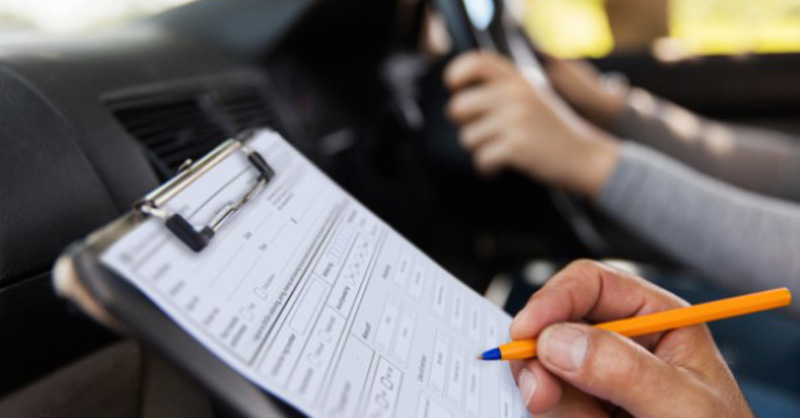
Bredbury Driving Test Centre (90 Lingard Lane, SK6 2QT) runs a 38–42 minute practical test. Examiners look for consistent, confident application of every skill — not perfection, but competence. A minor fault won't fail you; serious or dangerous faults do. DriveSQ's mock test format mirrors the Bredbury structure exactly, so your first-ever experience of a full timed test is with us, not on the real day.
DriveSQ Student App — Free with Every Course
Our student app gives you everything you need to pass faster:
- 700+ theory practice questions updated to 2025 DVSA standards
- 14 full mock theory tests with timed conditions
- HD hazard perception video clips with scoring
- Progress tracker so you and your instructor see exactly where you are each week
- Direct instructor messaging — ask questions between lessons
- Works offline — no signal needed on revision nights
Pricing for Intensive Driving Courses Lessons
- £35/hr — standard rate for lessons in SK6, Stockport
- 10 hrs for £330 — block booking, ideal for focused skill development
- Doorstep pickup — no extra charge in Stockport postcodes
Book Intensive Driving Courses Lessons In Sk6, Stockport
Call, WhatsApp or book online — we'll confirm your slot same day.
Driving in Stockport — Local Knowledge That Matters
Stockport (SK1) is a hilly market town with complex junctions and busy retail core. Learner drivers in this area build their skills on real local roads including Mersey Square and Wellington Road, with Stockport Market and Stockport Viaduct serving as practical navigation landmarks. Local knowledge is a genuine advantage when preparing for the DVSA practical test from Bredbury Driving Test Centre.
Local road fact: Stockport market, one of England's largest covered markets, creates significant Friday and Saturday pedestrian spillage onto surrounding roads, testing hazard perception in real conditions.
What this means for learners: Understanding local road patterns in Stockport is part of becoming a safe, confident driver. The steep gradient on Chestergate requires accurate hill-start technique and early anticipation on approach — an ideal spot for consolidating clutch control and handbrake starts.
Stockport's 27-arch railway viaduct, built in 1840, dominates the skyline above the River Mersey and serves as a landmark for navigation near the town centre test routes.
Lessons in Stockport cover the full spectrum of road environments found in SK1: residential side streets for early control practice, arterial roads for speed management and lane discipline, and local junctions that replicate the exact conditions assessed during the DVSA practical test. By the time you pass, every road in Stockport should feel familiar and manageable.
Key Driving Knowledge for Greater Manchester
- Highway Code Rule 170 requires you to give way to pedestrians when turning into a side road if they are already crossing.
- Roundabout lane selection must be decided before the give-way line — changing lanes inside a roundabout is one of the most common causes of serious test faults.
- Mirror checks should happen every 5-8 seconds on open roads and before every speed change, direction change or manoeuvre.
- The DVSA's recommended following distance is a 2-second gap in dry conditions — double it in rain and triple it in snow or ice.
Stopping distances: The Highway Code stopping distances — based on a 13.5-metre car in dry conditions — are the minimum legal reference points. In wet conditions, stopping distances at least double. In icy conditions, stopping distances can be ten times greater than dry distances. At 70mph on ice, a car travelling with 13.5 metres of following distance needs 750 metres to stop safely — over half a mile. These figures make a compelling case for reduced speed in adverse conditions.
DriveSQ instructors covering Stockport bring detailed knowledge of SK1 roads to every lesson. Stockport's 27-arch railway viaduct, built in 1840, dominates the skyline above the River Mersey and serves as a landmark for navigation near the town centre test routes. This local expertise means your lessons are always targeted, relevant and directly applicable to the roads you will drive every day after passing.
More About Stockport — Driving Context
History: Stockport's name combines 'stoc' (Old English for outlying settlement) with 'port' (market town) — the Roman fort of Mamucium supplied from Stockport's market crossing is recorded as early as the 1st century AD.
Transport links: Stockport railway station, a major interchange on the Manchester to London Midland Main Line, generates significant taxi and drop-off traffic on Wellington Road South — learners navigating this area must manage heavy stopping traffic at the station entrance.
Key road to know: The A6 through Stockport descends steeply from Hazel Grove toward Mersey Square — learners must understand how to use engine braking effectively on this gradient to avoid brake fade and maintain smooth speed management.
Parking in Stockport: Stockport's multi-storey car parks on Grand Central car park and Prince's Street include very tight turning radii on ramps — learners benefit from practising multi-storey manoeuvres as part of their post-test confidence building.
Weather and road conditions: Stockport's position in the Mersey Valley means it experiences significantly more precipitation than upland areas — the A6 through Stockport town centre is one of Greater Manchester's most congested wet-weather roads as drivers slow for the urban gradient.
Roundabout Rules Explained
Roundabouts are one of the most statistically safe junction types — they reduce fatal collision risk by up to 75% compared to signal-free crossroads. However, they are also one of the most commonly misunderstood features of UK roads. The fundamental rule is that circulating traffic (already on the roundabout) has priority over entering traffic. Signal use at roundabouts follows a specific code: signalling left when taking the first exit, signalling left after the last exit before your own, and keeping no signal until past the last exit for exits beyond 12 o'clock. Approaching lane selection at a roundabout should be determined by your exit direction: left-hand exits typically use the left lane, right-hand exits typically use the right lane, and 12 o'clock exits can use either lane depending on road markings. At mini-roundabouts, all vehicles must circulate clockwise but the roundabout is too small to realistically circulate — in practice, drivers yield to right and then pass over the marking if space permits. Double mini-roundabouts are treated as two separate junctions.
Junctions and Emerging
- Box junctions (yellow grid markings) must not be entered unless your exit is clear — the only exception is turning right when stopped by oncoming traffic or by a vehicle waiting to turn right.
- Unmarked junctions (no give-way lines, no priority signs) are governed by the general rule of equal priority — treat them as a courtesy situation where common sense and eye contact determine who proceeds first.
- Give-way lines at junctions require the vehicle to stop if necessary — unlike a stop line, a give-way allows you to proceed without stopping if the road is clearly free. However, many learners mistake 'can proceed without stopping' for 'should not slow significantly'.
- At T-junctions, the MSM routine begins 100 metres before the junction — not at the junction itself. Early mirror checks and positioning give following drivers maximum warning.
DVSA Practical Test — What You Need to Know
Automatic and manual driving tests use identical assessment criteria and marking standards. The only operational difference is that automatic test candidates are not assessed on clutch control, gear selection, or biting point management. This removes approximately 15% of the driver fault categories from the assessment — which partly explains why automatic test pass rates are approximately 5 percentage points higher than manual test pass rates nationally.
After You Pass — What New Drivers Need to Know
The green novice driver plate (displayed voluntarily by new drivers) has no legal status in England, Scotland and Wales but is widely respected by other drivers. Northern Ireland requires new drivers to display R plates for two years after passing. The DVSA recommends new drivers consider using N-plates or green P-plates for at least three months to encourage following drivers to give additional space and patience. The plate also serves as a self-reminder — research shows drivers who display a novice plate in the first months after passing drive more carefully and have fewer incidents.