Driving Test Day Tips in Hazel Grove, Stockport
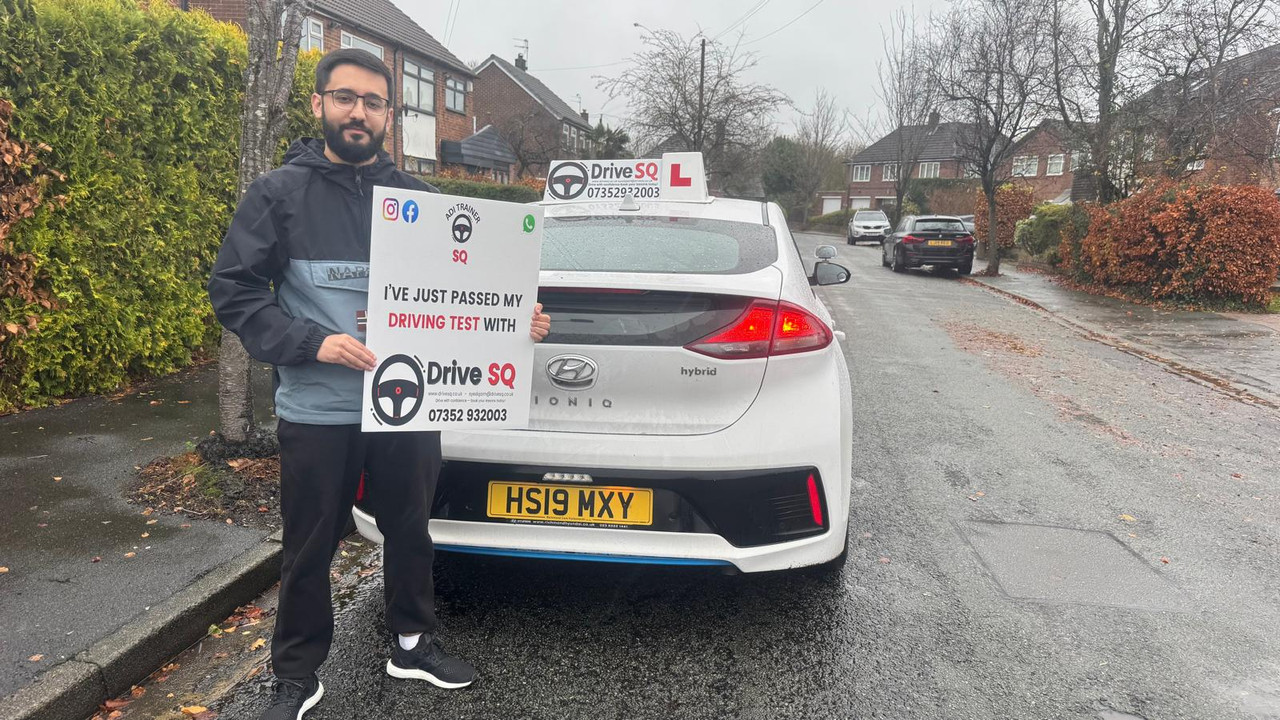
The practical test at Bredbury is 38–42 minutes. DriveSQ learners who've completed mock tests on the actual routes report feeling calm and prepared.
Book a Lesson
Fill in your details and we'll be in touch within 2 hours.
- Your request goes straight to the DriveSQ team (it isn't sold or shared).
- We call or text you to match you with an instructor near your postcode.
- You pick a time. You get free access to the DriveSQ Student Portal to track progress and revise.
No payment is taken through this form. By sending it you agree we can contact you about your lessons. Privacy
Why Driving Test Day Tips Matters in Hazel Grove
The roads around Hazel Grove (SK7) include the A6 dual-carriageway merge at Torkington Road and the Stepping Hill five-exit roundabout — the kind of challenge that makes driving test day tips essential training, not optional. DriveSQ instructors structure this skill into every lesson programme from day one.
We use Hazel Grove High Street as a local reference point and build lessons around the actual streets you'll drive after passing — including London Road (A6), Buxton Road, Commercial Road.
Key Tips — Driving Test Day Tips
How We Teach This in Hazel Grove
Every DriveSQ lesson in Hazel Grove follows a clear objective. For driving test day tips, we start in the quieter sections — Woodsmoor Lane and the quieter roads behind the high street — before building to the more demanding roads. By the time you complete a mock test circuit, this skill feels automatic, not stressful.
"The A6 dual carriageway used to terrify me. My instructor took me on it gradually — first in quiet periods, then at busier times. Now it feels completely natural."
Your Test Centre
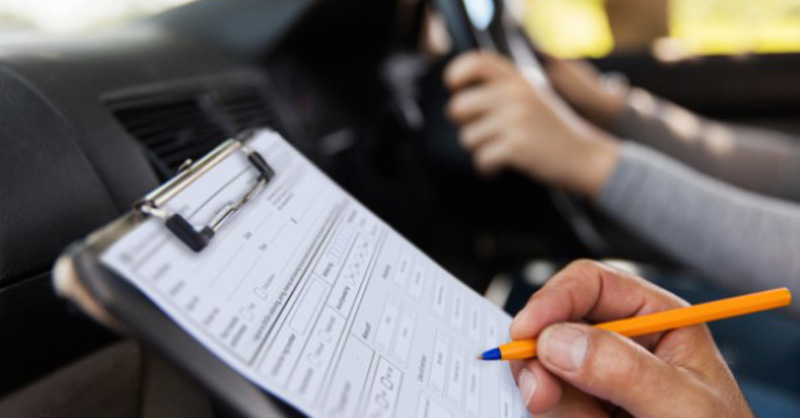
Most Hazel Grove learners test at Bredbury Driving Test Centre, 90 Lingard Lane, SK6 2QT (~54% pass rate, above the UK average of 48.7%). We run mock tests on the real Bredbury routes before your test date so nothing surprises you on the day.
DriveSQ Student App — Free with Every Course
Reinforce every lesson with our student app:
- 700+ theory questions updated to 2025 DVSA standards
- 14 full mock theory tests with timed conditions
- HD hazard perception clips with scoring
- Progress tracker — you and your instructor see improvement week by week
- Instructor messaging between lessons — ask questions any time
- Works offline — no signal needed on revision nights
Pricing in Hazel Grove
- £35/hr — standard rate in Hazel Grove
- 10 hrs for £330 — block booking
- Doorstep pickup in Hazel Grove — evenings and weekends available
Book Driving Test Day Tips Lessons in Hazel Grove
Call, WhatsApp or book online — we confirm your slot same day.
Driving in Stockport — Local Knowledge That Matters
Stockport (SK1) is a hilly market town with complex junctions and busy retail core. Learner drivers in this area build their skills on real local roads including Mersey Square and Wellington Road, with Stockport Market and Stockport Viaduct serving as practical navigation landmarks. Local knowledge is a genuine advantage when preparing for the DVSA practical test from Bredbury Driving Test Centre.
Local road fact: The steep gradient on Chestergate requires accurate hill-start technique and early anticipation on approach — an ideal spot for consolidating clutch control and handbrake starts.
What this means for learners: Understanding local road patterns in Stockport is part of becoming a safe, confident driver. Stockport's 27-arch railway viaduct, built in 1840, dominates the skyline above the River Mersey and serves as a landmark for navigation near the town centre test routes.
The A6 through Stockport is one of the busiest single-carriageway A roads in Greater Manchester, with buses, HGVs and cyclists creating a challenging learning environment.
Lessons in Stockport cover the full spectrum of road environments found in SK1: residential side streets for early control practice, arterial roads for speed management and lane discipline, and local junctions that replicate the exact conditions assessed during the DVSA practical test. By the time you pass, every road in Stockport should feel familiar and manageable.
Key Driving Knowledge for Greater Manchester
- Roundabout lane selection must be decided before the give-way line — changing lanes inside a roundabout is one of the most common causes of serious test faults.
- Mirror checks should happen every 5-8 seconds on open roads and before every speed change, direction change or manoeuvre.
- The DVSA's recommended following distance is a 2-second gap in dry conditions — double it in rain and triple it in snow or ice.
- Speed limits are maximums, not targets — always drive at the speed appropriate for the road conditions, visibility and traffic density.
Insurance impact: UK car insurance for newly passed drivers aged 17-21 averages £2,400 per year according to the Association of British Insurers. Completing Pass Plus reduces premiums by up to 35% with many major insurers. Adding a telematics (black box) policy can reduce premiums by a further 20-40% for drivers who demonstrate safe habits in the first three months.
DriveSQ instructors covering Stockport bring detailed knowledge of SK1 roads to every lesson. The A6 through Stockport is one of the busiest single-carriageway A roads in Greater Manchester, with buses, HGVs and cyclists creating a challenging learning environment. This local expertise means your lessons are always targeted, relevant and directly applicable to the roads you will drive every day after passing.
More About Stockport — Driving Context
History: Stockport's name combines 'stoc' (Old English for outlying settlement) with 'port' (market town) — the Roman fort of Mamucium supplied from Stockport's market crossing is recorded as early as the 1st century AD.
Transport links: Stockport railway station, a major interchange on the Manchester to London Midland Main Line, generates significant taxi and drop-off traffic on Wellington Road South — learners navigating this area must manage heavy stopping traffic at the station entrance.
Key road to know: The A6 through Stockport descends steeply from Hazel Grove toward Mersey Square — learners must understand how to use engine braking effectively on this gradient to avoid brake fade and maintain smooth speed management.
Parking in Stockport: Stockport's multi-storey car parks on Grand Central car park and Prince's Street include very tight turning radii on ramps — learners benefit from practising multi-storey manoeuvres as part of their post-test confidence building.
Weather and road conditions: Stockport's position in the Mersey Valley means it experiences significantly more precipitation than upland areas — the A6 through Stockport town centre is one of Greater Manchester's most congested wet-weather roads as drivers slow for the urban gradient.
Emergency Stop and Control
The emergency stop is a controlled, maximum-effort braking manoeuvre that must bring the vehicle to rest in the shortest possible distance while maintaining steering control. On modern vehicles with Anti-lock Braking Systems (ABS), the correct technique is to press the brake pedal as hard and as quickly as possible and maintain full pressure — ABS prevents wheel lock by pulsing brake pressure automatically, so do not pump the brake. Without ABS, the threshold braking technique — pressing to just before lockup point and holding — is optimal for straight-line stopping. Steering control during an emergency stop allows the driver to maintain their lane position even when braking at maximum effort — this is a significant safety advantage over uncontrolled stops. The emergency stop may be requested by the examiner during a DVSA practical test by raising their hand and saying 'stop' — one in three candidates are asked to perform an emergency stop. After an emergency stop, before moving off again, check mirrors, signal and check both blind spots, as following vehicles may have pulled around or beside you during the stop.
Observation Skills
- The two-second rule for following distance is measured from when the vehicle ahead passes a fixed point to when your front bumper passes the same point — if the count reaches two before you, you are too close.
- Scanning in front of the vehicle should cover the full field of view, not just the vehicle ahead — hedgerows, parked cars, driveways and junctions should all be monitored simultaneously at lower speeds.
- Anticipation — predicting what other road users will do before they do it — is the defining skill of an experienced driver. Watching for brake lights 3 vehicles ahead, monitoring pedestrians approaching crossings, and tracking cyclist body language all contribute to effective anticipation.
- Mirror checks before every speed change are not optional — reducing speed from 40mph to 30mph at a speed limit change requires a mirror check before braking to assess whether it is safe to decelerate.
DVSA Practical Test — What You Need to Know
Driver fault accumulation is not linear in its impact on test result. A candidate with 14 driver faults (one below the fail threshold) passes with the same result as a candidate with zero driver faults. However, the driver faults recorded provide useful feedback — any category with three or more driver faults recorded by the examiner is typically highlighted for post-test improvement even when the test is passed.
After You Pass — What New Drivers Need to Know
After passing your driving test, your journey as a driver is just beginning. The first year of independent driving carries the highest collision risk of any stage of a driver's career — new drivers are involved in road incidents at four times the rate of experienced drivers. Post-pass programmes including Pass Plus, motorway lessons with a qualified ADI, and telematics (black box) insurance all demonstrably reduce first-year risk. DriveSQ offers post-pass sessions specifically designed to build the additional skills that DVSA testing cannot fully assess: motorway driving, night driving, rural roads and adverse weather confidence.