Theory Test Revision That Actually Works

Stop wasting hours on ineffective revision methods. These evidence-based study techniques — spaced repetition, active recall, and interleaved practice — transform your theory test preparation from passive reading into active learning that produces reliable pass-level knowledge.

Why Most Revision Methods Fail

The most common theory test revision approach — reading the Highway Code repeatedly and completing random practice questions — is the least efficient method available. Passive re-reading creates an illusion of familiarity without building the retrievable knowledge the test demands.

Effective revision requires active engagement: testing yourself before you feel ready, spacing practice sessions to exploit memory consolidation during sleep, and focusing disproportionate effort on weak areas rather than repeatedly practising topics you already know.
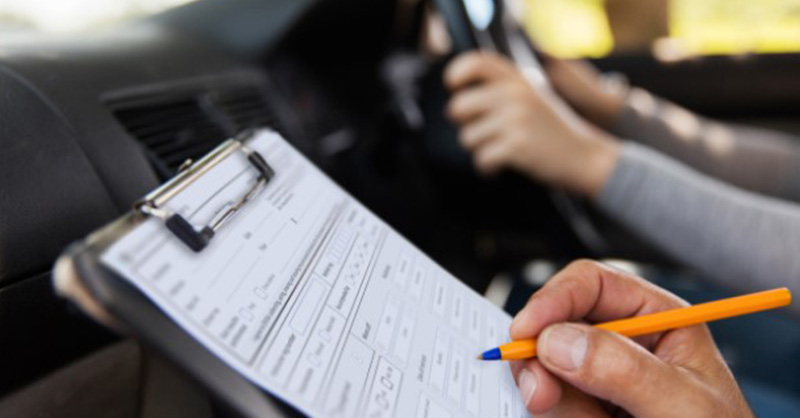
Theory test revision Manchester

Three Evidence-Based Techniques

Spaced Repetition

Study each topic at increasing intervals: day 1, day 3, day 7, day 14. This exploits the spacing effect — your brain consolidates memories more effectively when retrieval practice occurs at the point of near-forgetting rather than during immediate review. Use the DVSA app's progress tracking to space your category revision.

Active Recall

Close your study materials and attempt to answer questions from memory before checking answers. This retrieval practice strengthens memory pathways far more effectively than re-reading the same information. Wrong answers are valuable — they identify genuine gaps rather than highlighting existing knowledge.

Interleaved Practice

Mix question categories randomly rather than studying one category exhaustively before moving to the next. Interleaving forces your brain to identify which category each question belongs to — a discrimination skill the theory test requires when questions jump between topics unpredictably.

Four-Week Revision Plan

Week 1: Diagnostic Assessment

Complete one full mock test without any preparation. Record your score and identify every category where you scored below 80%. These categories become your primary revision targets. Read the relevant Highway Code sections for each weak category.

Week 2: Category Focus

Daily 45-minute sessions targeting weak categories using the active recall method. Complete 50 category-specific questions per session. Record which individual questions you get wrong and note the correct reasoning — not just the correct answer letter.

Week 3: Integration and Mock Tests

Complete one full mock test daily using interleaved question order. Target consistent scores of 46+ out of 50. Begin daily hazard perception practice using the DVSA app — complete all 14 clips each session, reviewing your click timing against the model answers.

Week 4: Final Preparation

Continue daily mock tests. If any category remains below 90% accuracy, dedicate a focused session to those specific questions. Two days before your test, complete your final mock tests. The day before, review your notes on persistent problem questions only. Test morning: no last-minute studying.

Revision Insight: The questions you get wrong are more valuable than the ones you get right. Every incorrect answer reveals a specific knowledge gap. Create a "wrong answers" document listing each failed question with the correct answer and the reasoning behind it. Review this document instead of re-reading the Highway Code.

"I failed theory twice using random YouTube videos and free apps. DriveSQ recommended the official app with spaced repetition, and suddenly everything clicked. Passed third time with 48/50 and 61/75. The study method matters more than the study hours."

— Kai, M13, theory passed 2026

Frequently Asked Questions

How long before my test should I start revising?
Begin 3-4 weeks before your test date. This allows sufficient time for spaced repetition — the most effective long-term memory technique. Starting earlier is unnecessary; starting later risks inadequate coverage of all 14 question categories.
What are the best theory test revision apps?
The official DVSA theory test kit app (£4.99) is the gold standard — it contains all questions from the actual test bank. Supplement with the official DVSA hazard perception app. Free apps often contain outdated or unofficial questions that may not reflect current test content.
Should I read the entire Highway Code?
Read it once for general comprehension, then use it as a reference for specific questions you get wrong during practice tests. The Highway Code contains significant content that is not directly tested — targeted study using practice questions is more efficient than exhaustive reading.
How do I know when I am ready to take my theory test?
When you consistently score 46+ out of 50 on multiple choice mock tests and 50+ on hazard perception across five consecutive full-length practice tests. Consistency is key — a single good score does not demonstrate reliable readiness.
Can I fail the theory test and retake it immediately?
You must wait at least three working days before rebooking. Use this period to analyse which categories caused your failure and target those areas specifically. Most second-attempt candidates pass after focused revision on their identified weak categories.

Message DriveSQ Now

DVSA-approved, £35/hr, door-to-door across Greater Manchester.

WhatsApp Us 07352 932003

Clayton Local Area Guide

Lessons around Clayton use real local roads including Ashton New Road (A662), Clayton Lane and Clayton Street, so by the time you're ready for your test you've already driven the streets you'll use every day after passing. Clayton Hall is a rare surviving medieval moated manor house, parts of it dating to the 15th century, whose owners once included the Byron family — ancestors of poet Lord Byron — and later Humphrey Chetham, founder of Chetham's School and Library.

We also plan around school-run traffic near Ravensbury Community School (Tartan Street, M11) and Clayton Brook Primary School (High Legh Road, M11), using quieter spots like Clayton Vale (Local Nature Reserve along the River Medlock) for early manoeuvre practice before stepping up to busier sections of Ashton New Road (A662).

Test centre: most learners around Clayton test at Cheetham Hill (Manchester) Driving Test Centre, Alderglen Road, Cheetham, Manchester, M8 0AL; mock tests are planned around the routes examiners actually use from there.

“Recommend to anyone learning around Clayton — real local roads, real local knowledge, none of the guesswork.” – Zara, Clayton
SQ Websites

Designed & Hosted by www.sqwebsites.co.uk

Crafted by Mohammed Qaim Abbas

Local Road Knowledge and Driving Education

Building local road knowledge is one of the most underestimated aspects of driver training. Knowing which junctions require extra observation, where speed limits change, and where vulnerable road users are most likely to appear turns a competent learner into a genuinely safe driver for life. DriveSQ lessons are planned around the actual roads you will drive every day after passing.

Key Driving Knowledge for Greater Manchester

Theory test insight: The DVSA theory test bank contains 982 questions across 14 topic categories. The hazard perception section requires identifying 14 clips with one developing hazard each, plus one clip containing two developing hazards. Candidates must respond as soon as the hazard starts to develop — the optimal window is within the first 1.75 seconds of hazard development to score maximum marks.

DriveSQ instructors bring nationally-accredited teaching methodology to every lesson, combined with deep local knowledge of Greater Manchester roads. Every lesson is planned to build on the previous one, creating a progressive learning journey from first drive to test-ready confidence.

Greater Manchester Road Network — Educational Guide

Greater Manchester's road network covers over 4,500 miles of road managed across ten metropolitan boroughs. The network includes motorways (M60, M62, M56, M61, M63), A-roads of regional importance (A6, A34, A56, A57, A580), and an extensive local road grid of B-roads and unclassified roads. Understanding the network hierarchy — and the different driving demands at each level — is a key part of driver education.

Manchester's city centre road network is managed by TfGM (Transport for Greater Manchester) using a SCOOT adaptive traffic signal system that responds to real-time vehicle detector data. This means signal phases can be shorter or longer than expected — learners should always approach signals prepared to stop rather than accelerating in anticipation of a green phase.

Pedestrian Priority in 2022

The 2022 Highway Code update fundamentally changed the relationship between drivers and pedestrians at junctions. Under the updated rules, when a driver is turning into a side road, pedestrians who are already crossing that road or intending to cross have priority. This is a significant change from the previous convention where drivers completing turns had right of way. Rule H2 of the updated Highway Code states that drivers must give way to pedestrians waiting to cross at a junction. Rule H3 requires cyclists and horse riders to give way to pedestrians on shared use paths. The updated hierarchy of road users places pedestrians at the top, followed by cyclists, motorcyclists, cars, vans and finally HGVs. This hierarchy reflects the relative vulnerability of road users in collisions — a pedestrian struck at 20mph has a 97% survival probability, rising to only 20% at 40mph. The practical implications for learners are significant: at every junction and roundabout approach, the first check must now be for pedestrians crossing or about to cross, before assessing vehicle traffic.

Lane Discipline Essentials

DVSA Practical Test — What You Need to Know

The eyesight test at the start of a DVSA practical test requires the candidate to read a standard number plate from 20 metres. This equates to approximately 5 car lengths. Candidates who wear glasses or contact lenses must wear them during the test — failure to do so when the eyesight check result requires correction constitutes grounds for terminating the test. Candidates who fail the eyesight test do not receive a refund of their test fee.

After You Pass — What New Drivers Need to Know

Vehicle maintenance responsibility transfers entirely to the driver after passing — and many new drivers are unaware of what this involves. Key monthly checks: tyre pressure (including spare), tyre tread depth (legal minimum 1.6mm across the central 75% of the tread width and around the entire circumference), oil level, coolant level, windscreen washer fluid, and all lights. Annual MOT from year three, six-monthly visual tyre inspection, and a full service to manufacturer's schedule. Driving a vehicle with a tyre tread below 1.6mm carries a £2,500 fine and three penalty points per tyre — four defective tyres could mean 12 points and licence revocation for a newly qualified driver.