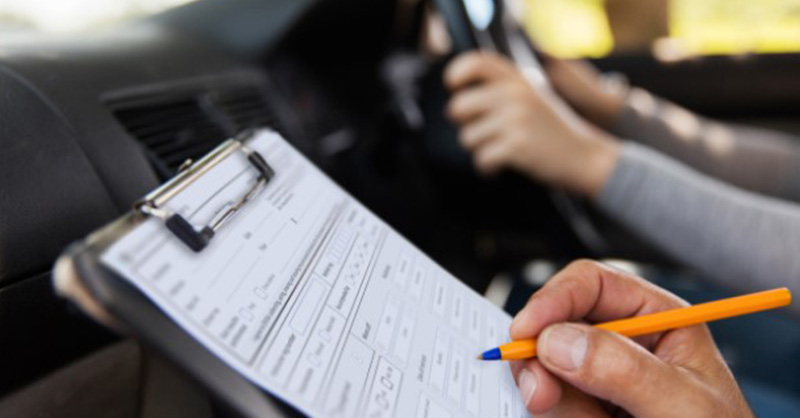
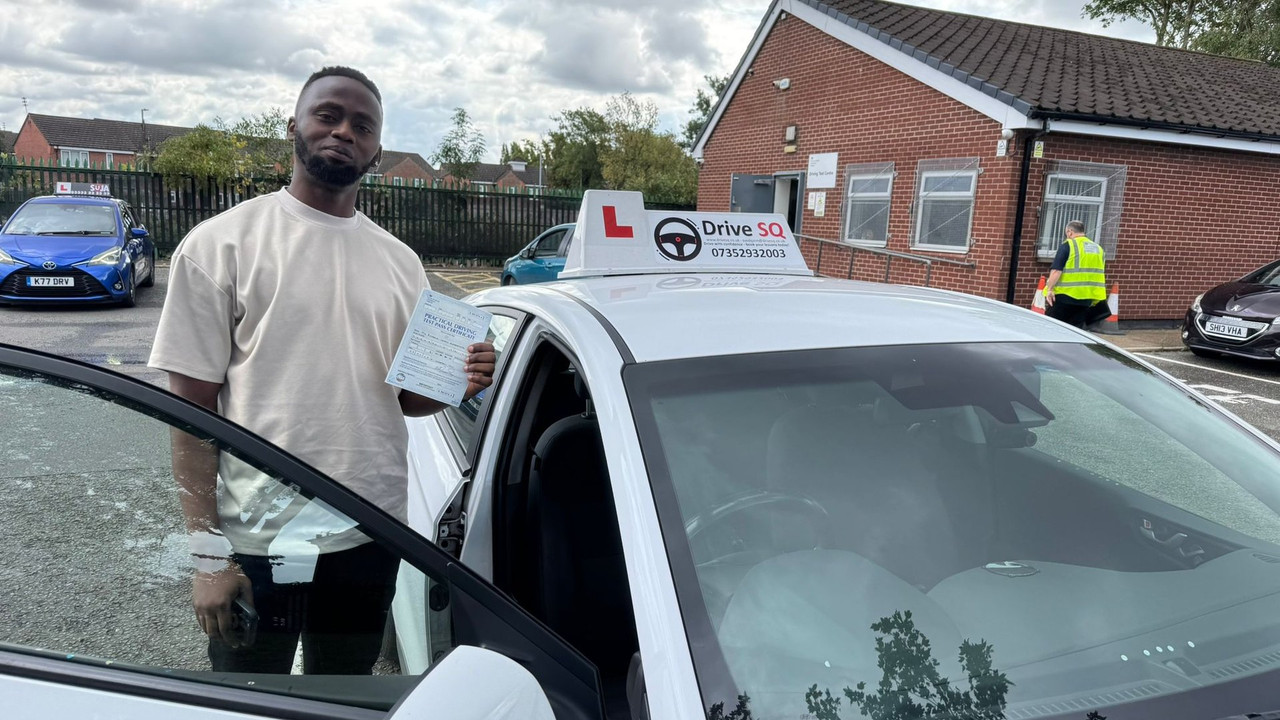
The examiner uses a DL25 marking sheet with 17 fault categories. Each fault is marked as: Driving fault (minor): Not dangerous or potentially dangerous....
The examiner uses a DL25 marking sheet with 17 fault categories. Each fault is marked as:

Based on DVSA national statistics, the top fail reasons are:

Professional driving lessons across Greater Manchester. DVSA-approved instructors, modern dual-controlled cars, and a genuine focus on getting you test-ready.
WhatsApp Us Call 07352 932003Lessons around the Dane Road area use real local roads including Dane Road, Marsland Road and School Road, so by the time you're ready for your test you've already driven the streets you'll use every day after passing. The Dane Road tram stop began life as a railway station opened in 1931 by the Manchester, South Junction and Altrincham Railway, before closing to trains in 1991 and reopening as a Metrolink stop in 1992.
We also plan around school-run traffic near St Anne's CE Primary School and Moorlands Junior School, using quieter spots like Dane Road Metrolink tram stop for early manoeuvre practice before stepping up to busier sections of Dane Road.
Test centre: most learners around the Dane Road area test at Sale (Manchester) Driving Test Centre, 36-38 Poplar Grove, Sale, M33 7ER; mock tests are planned around the routes examiners actually use from there.
“Practising near Dane Road Metrolink tram stop before tackling Dane Road made the whole thing feel manageable rather than overwhelming.” – Holly, Dane Road
Building local road knowledge is one of the most underestimated aspects of driver training. Knowing which junctions require extra observation, where speed limits change, and where vulnerable road users are most likely to appear turns a competent learner into a genuinely safe driver for life. DriveSQ lessons are planned around the actual roads you will drive every day after passing.
DVSA statistics: The UK practical driving test pass rate is approximately 48% on first attempt — meaning more than half of all candidates fail at least once. The most common serious fault categories are observation at junctions (31% of all serious faults), use of mirrors (19%) and incorrect response to traffic signs (11%). Structured lesson plans that specifically address these three areas significantly improve first-time pass rates.
DriveSQ instructors bring nationally-accredited teaching methodology to every lesson, combined with deep local knowledge of Greater Manchester roads. Every lesson is planned to build on the previous one, creating a progressive learning journey from first drive to test-ready confidence.
Greater Manchester's road network covers over 4,500 miles of road managed across ten metropolitan boroughs. The network includes motorways (M60, M62, M56, M61, M63), A-roads of regional importance (A6, A34, A56, A57, A580), and an extensive local road grid of B-roads and unclassified roads. Understanding the network hierarchy — and the different driving demands at each level — is a key part of driver education.
Manchester's city centre road network is managed by TfGM (Transport for Greater Manchester) using a SCOOT adaptive traffic signal system that responds to real-time vehicle detector data. This means signal phases can be shorter or longer than expected — learners should always approach signals prepared to stop rather than accelerating in anticipation of a green phase.
The Show Me Tell Me section of the DVSA practical test consists of two vehicle safety questions asked before the driving test begins. The Tell Me question is asked before driving — the candidate answers verbally without demonstrating. The Show Me question is asked while driving — the candidate demonstrates the control while the vehicle is moving safely. There are 19 Tell Me questions covering topics including tyre pressure, oil level check, windscreen wash, headlight adjustment and brake fluid. There are 20 Show Me questions covering heated rear window, indicators, horn, high-beam, windscreen washers, demisters and headlights. Both questions together count as one driving fault if answered incorrectly — the penalty is the same whether you answer one or both questions incorrectly. Candidates who prepare by practising all 39 questions using the DVSA's official revision guide routinely pass both parts without losing any marks. The questions are not memorised by rote but by understanding the function being tested — knowing that checking oil involves the dipstick on a warm engine is more useful than memorising a scripted answer.
Automatic and manual driving tests use identical assessment criteria and marking standards. The only operational difference is that automatic test candidates are not assessed on clutch control, gear selection, or biting point management. This removes approximately 15% of the driver fault categories from the assessment — which partly explains why automatic test pass rates are approximately 5 percentage points higher than manual test pass rates nationally.
Newly qualified drivers face a significant insurance premium challenge — average first-year premiums for 17-21 year olds exceed £2,000 annually. Several evidence-based strategies reduce this cost: adding an experienced named driver (not as a fronting arrangement — the young driver must be the primary user), selecting a lower-insurance group vehicle, increasing the voluntary excess, and installing a telematics device. Telematics policies monitor acceleration, braking, cornering, speed and time of driving — young drivers who score well typically see 20-40% premium reductions at renewal. Pass Plus qualification reduces premiums with many major insurers by up to 35%.