Overview
Greater Manchester has seven practical driving test centres. Each has its own character, routes, and quirks. DriveSQ instructors teach at all of them — here is our insider guide.
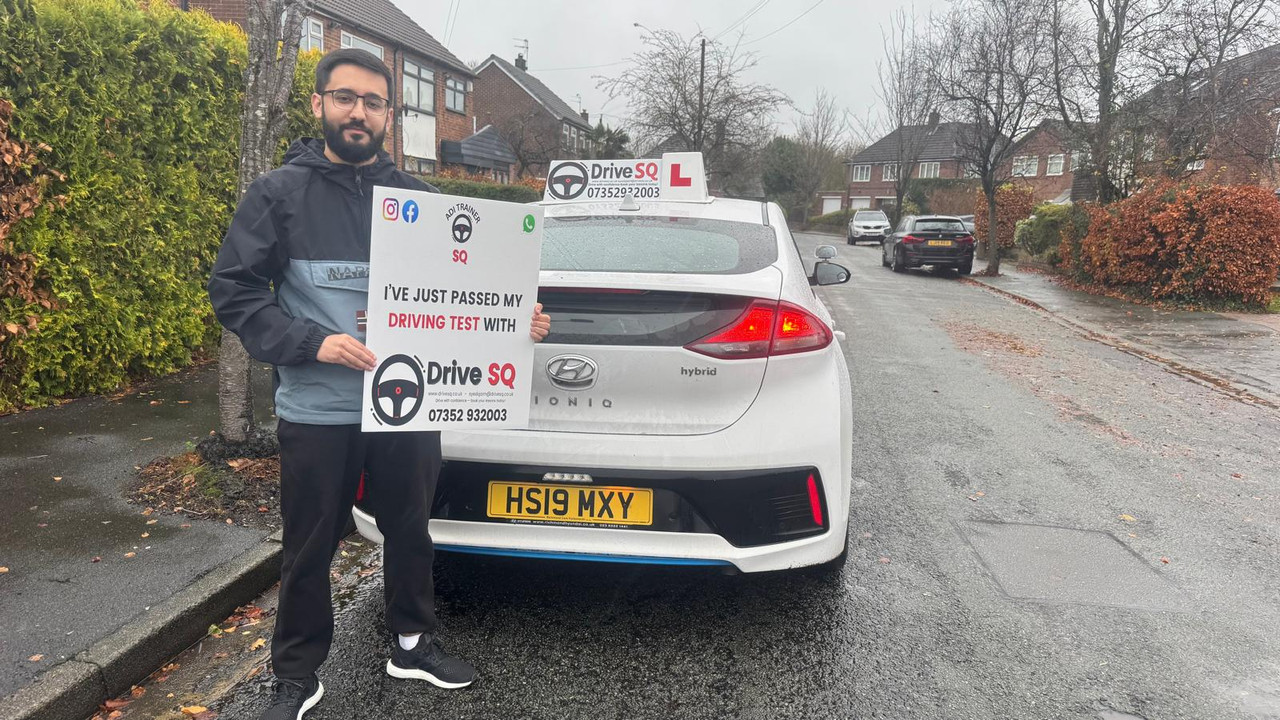
Greater Manchester has seven practical driving test centres. Each has its own character, routes, and quirks. DriveSQ instructors teach at all of them —...
Greater Manchester has seven practical driving test centres. Each has its own character, routes, and quirks. DriveSQ instructors teach at all of them — here is our insider guide.
DriveSQ offers dedicated test-route practice sessions at any Manchester test centre. We drive the examiner's actual routes so test day feels familiar.
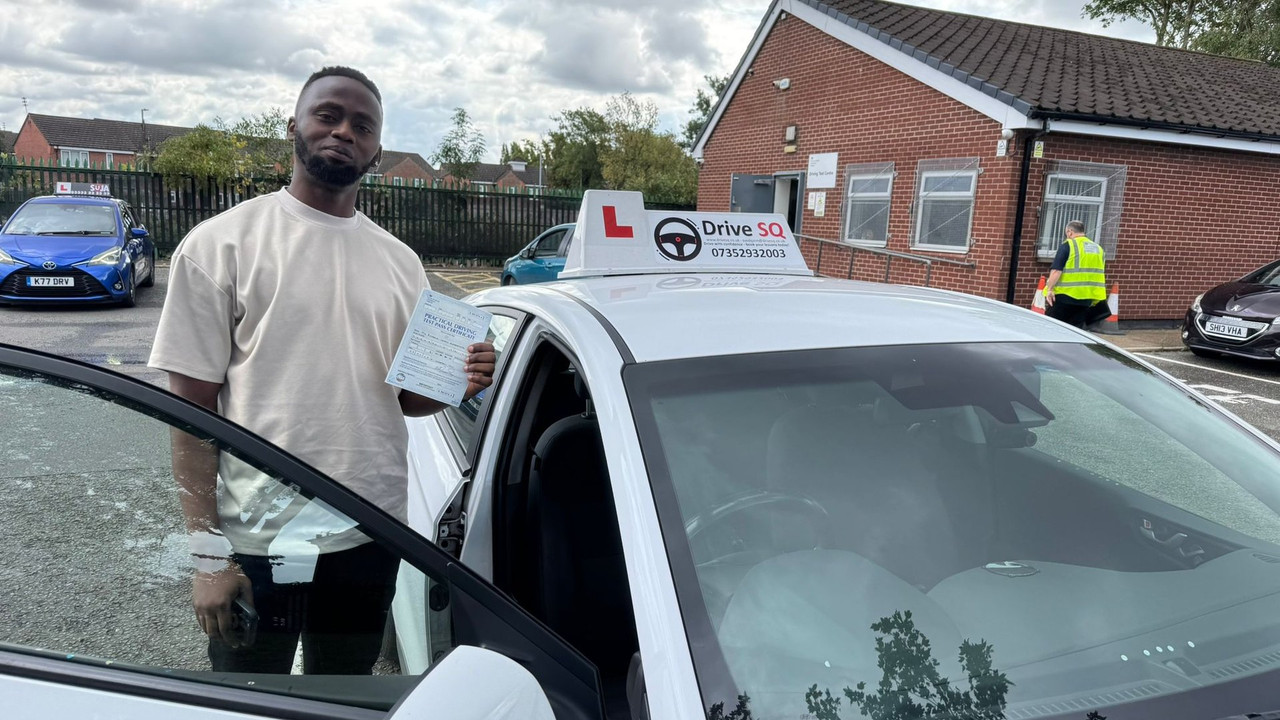
Professional driving lessons across Greater Manchester. DVSA-approved instructors, modern dual-controlled cars, and a genuine focus on getting you test-ready.
WhatsApp Us Call 07352 932003Lessons around Spinningfields use real local roads including Bridge Street, Deansgate and Hardman Street, so by the time you're ready for your test you've already driven the streets you'll use every day after passing. Spinningfields takes its name from a narrow Victorian street, Spinningfield, where cotton was historically prepared for weaving before the area was redeveloped into Manchester's modern financial district from the 1990s onward.
We also plan around school-run traffic near St Mary's RC Primary School (Hulme) and Webster Primary School (Denmark Road, Greenheys), using quieter spots like Manchester Crown Court (Crown Square) for early manoeuvre practice before stepping up to busier sections of Bridge Street.
Test centre: most learners around Spinningfields test at Cheetham Hill (Manchester) Test Centre, Alderglen Road, Cheetham, Manchester, M8 0AL; mock tests are planned around the routes examiners actually use from there.
“Booking was easy and my instructor adapted lessons around St Mary's RC Primary School (Hulme) traffic without me even having to ask.” – Ellie, Spinningfields
Fill in your details and we'll be in touch within 2 hours.
Building local road knowledge is one of the most underestimated aspects of driver training. Knowing which junctions require extra observation, where speed limits change, and where vulnerable road users are most likely to appear turns a competent learner into a genuinely safe driver for life. DriveSQ lessons are planned around the actual roads you will drive every day after passing.
DVSA statistics: The UK practical driving test pass rate is approximately 48% on first attempt — meaning more than half of all candidates fail at least once. The most common serious fault categories are observation at junctions (31% of all serious faults), use of mirrors (19%) and incorrect response to traffic signs (11%). Structured lesson plans that specifically address these three areas significantly improve first-time pass rates.
DriveSQ instructors bring nationally-accredited teaching methodology to every lesson, combined with deep local knowledge of Greater Manchester roads. Every lesson is planned to build on the previous one, creating a progressive learning journey from first drive to test-ready confidence.
Greater Manchester's road network covers over 4,500 miles of road managed across ten metropolitan boroughs. The network includes motorways (M60, M62, M56, M61, M63), A-roads of regional importance (A6, A34, A56, A57, A580), and an extensive local road grid of B-roads and unclassified roads. Understanding the network hierarchy — and the different driving demands at each level — is a key part of driver education.
Manchester's city centre road network is managed by TfGM (Transport for Greater Manchester) using a SCOOT adaptive traffic signal system that responds to real-time vehicle detector data. This means signal phases can be shorter or longer than expected — learners should always approach signals prepared to stop rather than accelerating in anticipation of a green phase.
The 2022 Highway Code update fundamentally changed the relationship between drivers and pedestrians at junctions. Under the updated rules, when a driver is turning into a side road, pedestrians who are already crossing that road or intending to cross have priority. This is a significant change from the previous convention where drivers completing turns had right of way. Rule H2 of the updated Highway Code states that drivers must give way to pedestrians waiting to cross at a junction. Rule H3 requires cyclists and horse riders to give way to pedestrians on shared use paths. The updated hierarchy of road users places pedestrians at the top, followed by cyclists, motorcyclists, cars, vans and finally HGVs. This hierarchy reflects the relative vulnerability of road users in collisions — a pedestrian struck at 20mph has a 97% survival probability, rising to only 20% at 40mph. The practical implications for learners are significant: at every junction and roundabout approach, the first check must now be for pedestrians crossing or about to cross, before assessing vehicle traffic.
Test cancellation by the candidate requires at least three clear working days' notice to avoid forfeiture of the £62 test fee. If the DVSA cancels a test due to examiner sickness or other operational reasons, a full refund is offered. The waiting time for a test appointment varies significantly by test centre — Manchester centres typically have 4-10 week waits in normal periods, but backlogs following industrial action or pandemic disruptions can extend this to 16+ weeks.
Vehicle maintenance responsibility transfers entirely to the driver after passing — and many new drivers are unaware of what this involves. Key monthly checks: tyre pressure (including spare), tyre tread depth (legal minimum 1.6mm across the central 75% of the tread width and around the entire circumference), oil level, coolant level, windscreen washer fluid, and all lights. Annual MOT from year three, six-monthly visual tyre inspection, and a full service to manufacturer's schedule. Driving a vehicle with a tyre tread below 1.6mm carries a £2,500 fine and three penalty points per tyre — four defective tyres could mean 12 points and licence revocation for a newly qualified driver.